
You've found vacancies, updated your CV and sent applications. Then your inbox stays quiet. That can be discouraging, especially when you are planning a move or trying to start a teaching career.
A lack of reply does not, by itself, tell you why an application did not progress. The reason may be a mismatch, timing, an incomplete application or a decision you cannot see from outside. Treat the points below as possibilities to investigate, not conclusions about a particular school's process.
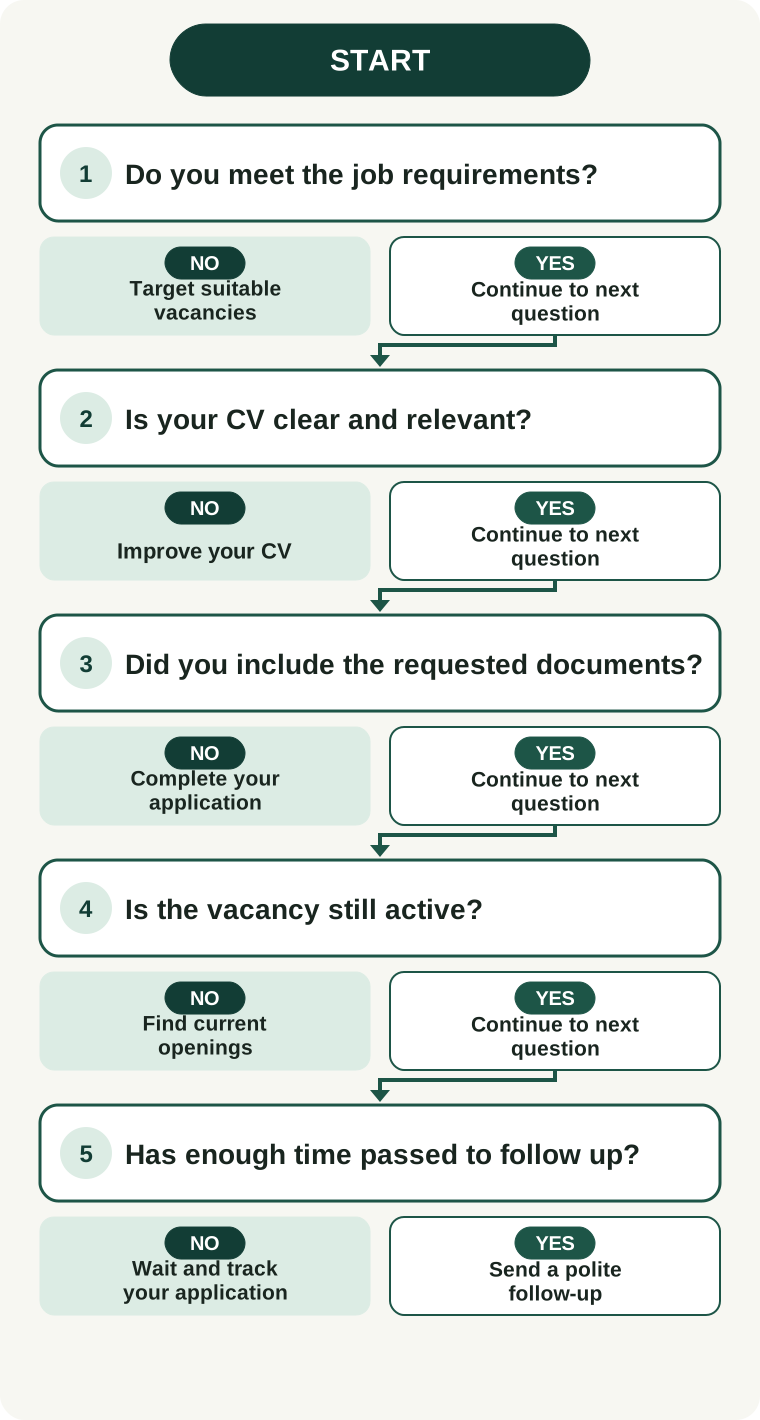
Quick check: review these five things
- Do you meet the essential requirements stated in the advertisement?
- Can a reader quickly find your degree, teaching credentials and relevant experience?
- Did you follow the requested application method and attach the requested documents?
- Does your availability match the stated location and start date?
- Have you followed up once, politely, if the stated timeline has passed?
The decision path below turns those checks into next steps. A “No” points to an action; “Yes” moves you to the next question.
9 possible reasons for no reply
1. Your experience or qualifications do not match the vacancy
Teaching roles vary by school, subject, age group and required credentials. Compare your background with the essential criteria before applying. If a requirement is unclear, ask the employer rather than assuming it is flexible.
2. Your CV hides the most relevant information
Put your education, teaching-related training, relevant experience and contact details where they are easy to find. Describe transferable skills accurately; do not present tutoring, volunteering or unrelated work as formal classroom teaching.
Use our teaching CV guide for Thailand to review structure and wording.
3. Your message looks generic
Name the role and school, briefly connect your experience to the advertised criteria, and keep the message concise. A reusable template is useful, but check every detail before sending.
4. The timing or start date does not fit
Recruitment calendars differ among employers and school types. Ajarn.com's Newbie Guide, updated 10 September 2026, describes periods before the Thai academic year in May and around October as common hiring periods, while noting that vacancies can arise outside them. Treat this as general guidance, not a schedule every employer follows. Read Ajarn.com's Newbie Guide.
Check the vacancy's own deadline and intended start date. A specific advertisement is more relevant to your application than a general calendar.
5. Your current location or availability may not fit
Some advertisements specify a preferred location or immediate availability; others may allow time for relocation. Read each listing and state where you are based, whether you can interview online and when you could realistically start. Do not promise a start date before checking your circumstances.
6. You missed a requested document or instruction
Follow the listing's submission instructions closely. If it asks for a CV, cover note, references or certificates, include only the requested materials in the requested format. See our Thailand teaching application documents checklist.
7. You are applying for roles that do not fit your profile
Specialist subjects, school levels and experience requirements can differ. Focus on openings where your evidence matches the stated criteria instead of sending the same application to every vacancy.
8. The vacancy may have changed or closed
Online listings can be updated, filled or removed. Before preparing a lengthy application, confirm that the vacancy is still open when the listing looks old or the deadline has passed. Our guide to finding and checking teaching jobs in Thailand covers job-board and employer checks.
9. You have not followed up, or have followed up too often
If the employer gave a response timeline, wait until it passes. Otherwise, one short follow-up after about a week is a reasonable professional courtesy, not a guarantee of a reply. Avoid repeated messages across multiple channels.
What to do after five unanswered applications
- Make a simple record of the role, school, date, requirements and documents sent.
- Check whether the roles shared a requirement you did not meet.
- Ask someone to review your CV and application email for clarity and errors.
- Apply to a smaller set of well-matched, current vacancies, tailoring the first paragraph each time.
- Track whether you receive replies, interviews or requests for more information, then improve the stage where applications stop.
If you are getting interviews, your next step is interview practice. Use our Thailand interview and demo lesson guide.
Follow-up email template
Use this only if the vacancy is still open and the employer has not asked applicants not to follow up.
Subject: Follow-up: [Job title] application — [Your name]
Dear [Hiring Manager / School Name],
I’m following up on my application for the [job title] position, sent on [date]. I remain interested in the role and would be happy to provide any further information. I am currently based in [location] and available to discuss a realistic start date.
Thank you for your time.
Kind regards,
[Your name]
[Phone / email]
Do you need a TEFL certificate to get more replies?
A TEFL certificate may be relevant when a vacancy asks for one or when you need structured initial training. It cannot guarantee a response, interview, job, visa or teaching authorization. Check the specific employer's requirements and confirm any professional or work-authorization questions with the relevant Thai authority and employer. Compare courses only if training is a gap you have identified.
Frequently asked questions
How long should I wait for a reply?
Follow the timeline in the advertisement or confirmation email. If none is given, allow a reasonable interval before sending one concise follow-up; employers do not all use the same process.
Can I apply for teaching jobs in Thailand from abroad?
Some vacancies may consider overseas applicants and others may specify local availability. Check each advertisement and state your location and realistic availability clearly.
Should I contact schools directly?
Use the application channel named by the school. If direct applications are invited, send a concise message with the requested documents. Avoid unsolicited bulk emails.
Will a TEFL certificate guarantee an interview?
No. It may meet a stated requirement, but employers make their own decisions and a certificate does not guarantee an interview or job.
Source note: The hiring-period context above is based on Ajarn.com's Newbie Guide, updated 10 September 2026 and reviewed for this article on 18 October 2026. Hiring calendars and individual vacancies can change. This article does not make claims about any specific employer's internal process.